In September, You Pick the Model Behind Apple Intelligence
Disclosure: AIStackScout is reader-supported. Some of our articles contain affiliate links. If you purchase through these links, we may earn a commission at no extra cost to you.
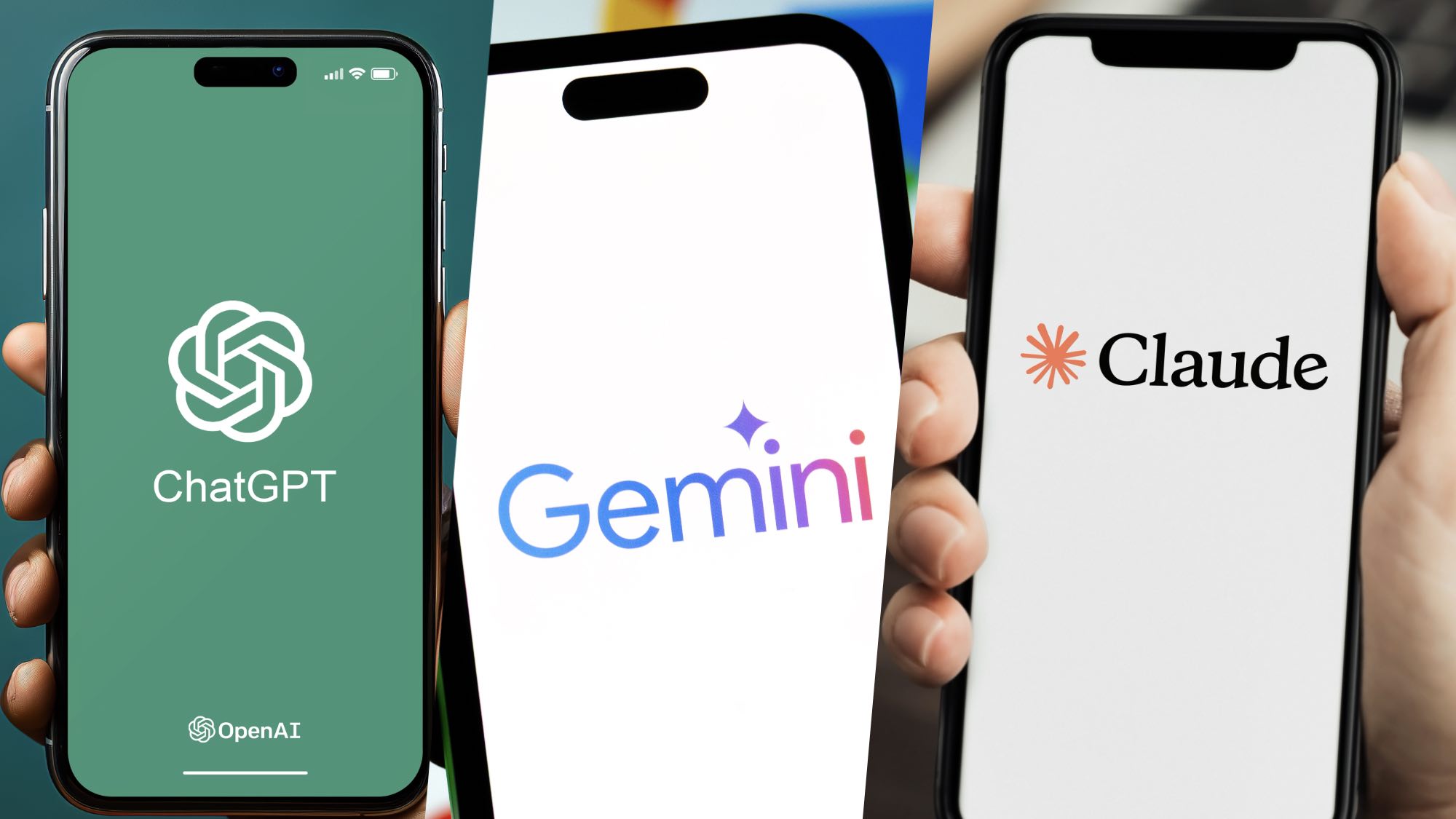
On June 8, in his final keynote as Apple's CEO, Tim Cook spent the loudest minutes of WWDC on the quietest-sounding change: Apple Intelligence will no longer be a single black box you either accept or ignore. Starting with iOS 27 this September, the assistant sitting on roughly 2.2 billion active Apple devices becomes a setting — you decide whether Anthropic's Claude, OpenAI's ChatGPT, or Google's Gemini does the thinking.
That sounds like a preferences toggle. It is closer to the end of an era. For three years, picking a platform meant inheriting its assistant, and standardizing your company on “an AI” quietly meant betting on one vendor's roadmap, pricing, and policies. Apple just decoupled the model from the operating system in front of the largest installed base in computing. If you run a team, that changes the bet you are making.
The bottom line on Apple Intelligence's new model switch
Here is the verdict before the detail: stop thinking about AI assistants as something you choose once, and start treating the model as a component you swap to fit the job. Apple is shipping a new Extensions system that lets any user point Apple Intelligence and Siri at Claude, ChatGPT, or Gemini, with each model answering in its own distinct voice. Gemini is the default. You are not stuck with the default — and neither is anyone on your team, which is the part most leaders will miss until a staffer is quietly running company queries through a model nobody approved.
The strategic move is not “which assistant is best.” It is recognizing that the question itself just got cheaper to answer wrong, because switching is now a setting rather than a migration.
What Apple actually shipped — and what it didn't
Strip the keynote theater and here is what changed. iOS 27, iPadOS 27, and macOS 27 introduce an Extensions framework where the model behind Apple Intelligence is user-selectable: Claude, ChatGPT, or Gemini. Each keeps its own personality and answer style, so the same prompt returns visibly different results depending on which engine you chose.
Underneath that choice is a detail Apple soft-pedaled on stage. Siri itself was rebuilt on a custom Gemini model — roughly 1.2 trillion parameters — that Apple licensed from Google in a deal reported at about $1 billion a year, with the heavy reasoning running on Apple's Private Cloud Compute rather than on Google's servers. So the floor is Google. The choice sits on top of it.
Two constraints matter before you plan around any of this. First, none of it is live today. It ships with the general release of iOS 27 in September 2026, not in the betas you can poke at now. Second, the AI features require an iPhone 15 Pro or newer, which means a chunk of your team's older devices are excluded until the next refresh cycle. Treat the September date and the hardware floor as real planning inputs, not footnotes.
Why a settings toggle is a strategy problem
The number that makes this more than a consumer story is 2.2 billion. That is the active-device base Apple just turned into a distribution channel for three competing AI models at once. Whatever model your customers, your employees, and your competitors reach for, it is now one tap away on hardware they already own.
For the past few years, the quiet risk in every AI decision was lock-in. Commit your workflows, your prompts, and your team's habits to one provider, and a price increase, a policy shift, or a quality regression became your problem with no easy exit. Apple just made the exit a toggle. That cuts both ways: the cost of being wrong about a model drops, and so does the cost of switching when a competitor's model pulls ahead. The companies that come out ahead over the next two years will be the ones that treat that optionality as a feature instead of pretending their first choice was permanent.
Think about what that does to moats built on assistant lock-in. A rival who bet everything on one provider's ecosystem just lost the argument that their integration is irreplaceable, because the model underneath is now portable. Your customers, meanwhile, are about to get fluent in switching models on their phones — which means they will expect the same flexibility from the software you sell them. The expectation curve moves the moment 2.2 billion people get a model picker.
There is a control question hiding here too. If Gemini is the default and most people never change a default, then your company's casual AI queries have a default data path to Google unless someone decides otherwise. That is a governance decision dressed up as a settings screen. Leaving it on autopilot is itself a choice — usually the wrong one.
Match the model to the task, not the brand to the company
The practical shift for leaders is to stop standardizing on a single assistant and start matching the model to the work. The three engines Apple put on equal footing are genuinely different. One is stronger at long-document reasoning and careful drafting, another at fast retrieval and breadth, another at code. When the cost of switching is a setting, insisting everyone use one model “for consistency” is no longer discipline — it is leaving capability on the table.
Make it concrete. Route contract and policy review to the model that reasons carefully over long documents, hand fast customer-email triage to the one built for breadth and speed, and send your engineers' questions to the model tuned for code. Same team, same budget, three engines each doing what it does best. This is the logic you already apply to the rest of your stack — you do not run payroll and design through one tool because it is tidier. AI models are now components you can route by task, and that exercise pairs directly with knowing which tools earn their seat in the first place, which is the work behind our guide to the AI tools worth standardizing on in 2026.
The catch leaders should price in
Be clear-eyed about the limits of the “choice” Apple is selling. The selectable models live at the extension layer, while the core of the new Siri is a Google-derived model Apple is paying roughly $1 billion a year to license. You can change which assistant answers your harder questions; you cannot change that Apple's own foundation now leans on Google. For a company weighing concentration risk across the AI market, that is a data point, not a deal-breaker — but it belongs in the analysis.
The hardware floor is the other quiet cost. “Requires iPhone 15 Pro or newer” reads as a spec line and behaves like a budget line. If your team's phones skew older, the model-choice future does not arrive for them in September — it arrives whenever you refresh the fleet. Plan the rollout, and the spend, accordingly.
What to do before September
You have a quarter to get ahead of this instead of reacting to it. Three moves are worth making now.
- Decide your default on policy, not inertia. Pick the model your team should run by default and the data rules around it, before the September update picks Gemini for you and your people quietly accept it.
- Map tasks to models. List the handful of AI-heavy jobs your team does each week and decide which engine fits each. That map is what turns a toggle into an advantage.
- Revisit any single-vendor commitment. If you signed a contract or built workflows assuming one model was permanent, that assumption just got cheaper to revisit. Use the opening Apple just handed you.
None of this requires waiting for the update to land. The decisions are yours to make now; the toggle just makes them enforceable later.
The real question Apple just put on your desk
WWDC 2026 will be remembered for the model switch, not the keynote that introduced it. The takeaway for anyone running a team is not that Apple picked Gemini, or that Cook went out on a deal with Google. It is that “which AI assistant” stopped being the question. “Which model for which job, and who decides” is the question now — and it is one you can answer before September if you do the work.
We compare the three models Apple just placed on equal footing on exactly that question. If you are going to choose deliberately instead of accepting a default, start with our breakdown of Gemini vs ChatGPT vs Claude and which one to standardize on.